If you found a weird green caterpillar on your tomato plant and you’re staring at an image of tomato hornworm, you’re probably worried it could wipe out your foliage fast. Hornworms blend in so well that many gardeners only notice after leaves look ragged or stems look stripped. Use the clues below to identify it quickly and take action before damage spreads.
For more help, see our Identify Tomato Hornworms guide.
What a tomato hornworm looks like
Spot the size, color, and body shape
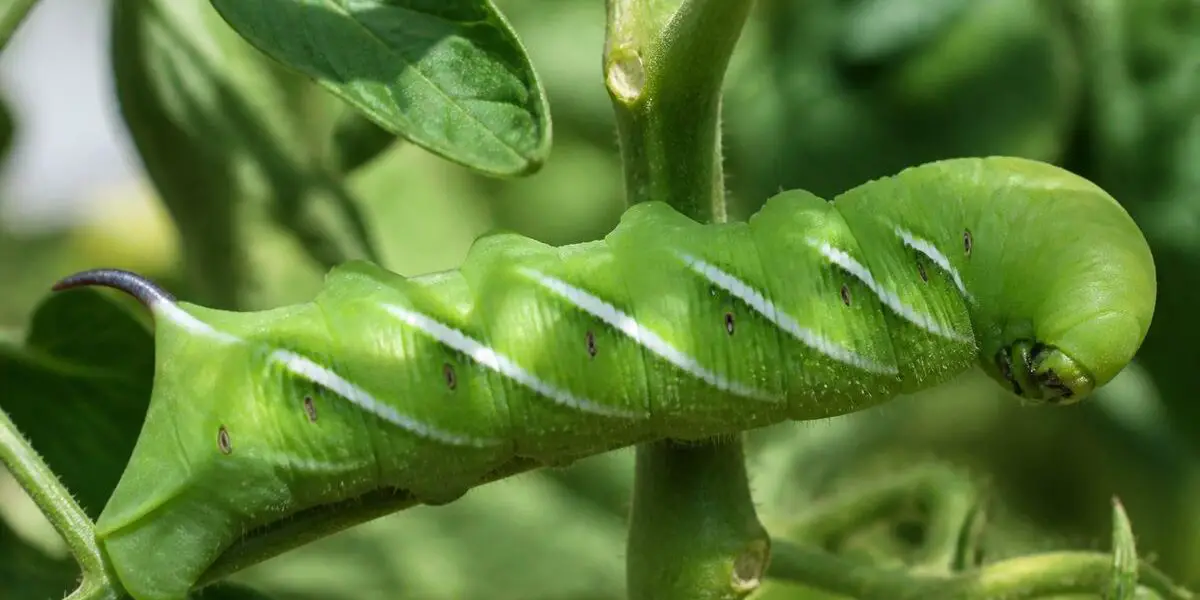
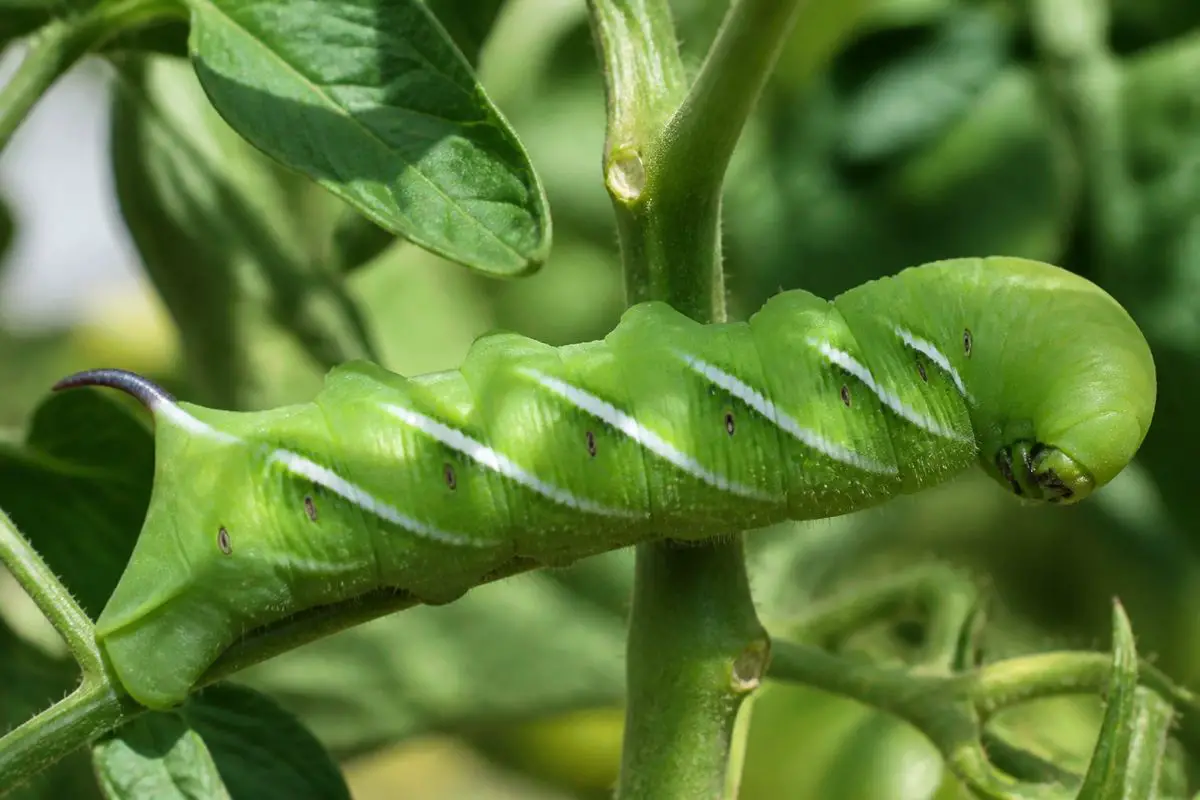
A tomato hornworm is a large, thick-bodied green caterpillar. Adult larvae can reach 4 to 6 inches long, with a smooth-looking body and a “meaty” shape that feels bulky compared to smaller leaf-eaters. The green can range from bright green to darker green, and you may notice subtle color mottling along the sides. Look for a caterpillar that holds itself like it is “built for eating,” not a thin, lightly colored insect that stays tucked in place. An image of the body shape helps, but the markings matter most for true identification.
- Compare the caterpillar’s size to your finger, not the leaf.
- Look for a thick body, not a slender one.
- Check for a green caterpillar with strong contrast along the sides.
Look for the horn and diagonal white stripes
The rear of a hornworm has a horn-like spike, usually dark at the tip. That horn is the easiest “aha” feature once you know where to look. Along the body, tomato hornworms show diagonal white stripes on the sides. These stripes are angled, not straight vertical lines, and they stand out against the green. Some individuals also have a pale pattern near the head end. If you have a photo, zoom in on the rear horn and then scan for the angled white striping across each body segment.
- Find the back end and look for the horn spike.
- Scan for angled, diagonal white lines on the sides.
- Use close-up lighting to avoid missing pale stripe edges.
Tell it apart from similar green caterpillars
Several green caterpillars can sit on tomatoes, so you need a quick separation strategy. Tomato hornworms have the horn spike plus bold diagonal white striping. Tobacco hornworms are extremely similar, but their side markings differ (more on that below). Some other green caterpillars have different stripe layouts, different head patterns, or no rear horn. The best method is to compare your photo to a reliable reference image, then verify the horn and the diagonal stripe pattern in person.
- Confirm the rear horn first (no horn means it is not a hornworm).
- Match the stripe angle and placement, not just the color.
- Note the host plant, because hornworms prefer specific targets.
Where to inspect on the plant
Check the top leaves first
Start where feeding damage shows up. Hornworms eat from the top and middle of the plant, stripping leaflets and chewing along petioles and stems. Scan the top leaves with good light, then look for holes, ragged edges, and leaf tissue that looks scraped away. A hornworm often stays still when you approach, using its green color as camouflage, so the “before you see it” signs matter. If you only inspect the undersides first, you can miss the biggest clues near the canopy.
- Use a flashlight in late afternoon for sharper visibility.
- Look for missing leaf sections on the top canopy.
- Scan the main stem where leaves attach.
Search the undersides and inner stems
Once you find damage, check the spots that match the feeding path. Hornworms spend time on the undersides and along inner stems where they can hide from view and predators. Lift leaves gently and look for the caterpillar’s body pressed against the plant. Check the junctions where side shoots meet the main stem, and inspect leafy clusters near flowers. If you find droppings and fresh leaf scraps in a certain area, inspect directly above and below that zone.
- Lift leaf edges and look for movement or a thick green body.
- Check inner stems and tight clusters where they hide.
- Follow frass spots to the nearest leaf or stem connection.
Look for feeding damage that gives it away
Hornworm feeding leaves clear signatures. You may see hollowed leaflets, skeletonized tissue, chewed stems, or large patches where the plant looks “cleaned off.” Fresh feeding also produces small piles of dark green or black frass (droppings) near the feeding area. The combination of leaf stripping, frass, and a thick caterpillar is a strong match. If you only see tiny bites, it might be a different pest, so keep looking until you find the source.
- Search for leaf edges that look chewed, not just yellowed.
- Look for frass near where leaves were removed.
- Inspect any stem that looks shredded or scraped.
How to identify eggs, larvae, and pupa stages
Recognize tiny eggs before they hatch
Eggs are small, pale, and easy to overlook on tomato plants. You will usually find them on the underside of leaves or close to tender leaf tissue where the first feeding can start. Eggs often look like neat dots rather than a fuzzy cluster. If you see tiny pale specks and you also notice fresh feeding damage elsewhere on the plant, eggs are likely present even if you cannot spot a caterpillar yet. Use a close look on the plants you inspected most thoroughly for larvae.
- Examine the undersides of newer leaves and the top third of the plant.
- Use a phone camera zoom to spot tiny pale dots.
- Focus on areas near fresh frass or newly chewed leaf edges.
Identify young hornworms before they grow large
Early-stage hornworms are smaller and can be harder to see because their markings may be less obvious than on large larvae. Young larvae can still show the key horn feature as they develop, but the horn may look less dramatic at first. You will usually spot them by their feeding spots and the frass trail, then notice the caterpillar tucked into leaf structure. When you find a small green caterpillar on tomato foliage, check the rear area for the horn beginning and look for diagonal striping emerging on the sides.
- Follow frass to the nearby leaf where the larva is feeding.
- Look closely at the rear end for a horn spike as it forms.
- Track any single larva as it grows over a few days.
Know what the pupal stage looks like
Hornworms leave the foliage to pupate in the soil. The pupa is not a caterpillar you will see on leaves. Instead, it forms in the ground near where the plant grows, using the surrounding soil for protection. Look for compact pupal structures only if you dig near the base after the season slows or if you have a history of recurring infestations. The important practical point is that pupae overwinter in or near the soil, so soil-level control at the right time matters.
- Inspect the soil surface near the plant base if caterpillars disappear.
- Assume pupation happens in nearby soil when larvae stop feeding.
- Plan soil management at season end to reduce next-year emergence.
Common look-alikes and how to separate them
Distinguish tomato hornworms from tobacco hornworms
Tomato and tobacco hornworms look nearly identical at a glance, but the diagonal stripe patterns and horn details help you separate them. Tobacco hornworms usually show a different striping pattern along the body, with markings that appear less consistently diagonal than in tomato hornworms. The horn tip color can also differ, so use a close-up photo of the rear for reference. If you are unsure, base your call on two things together: diagonal white striping plus horn appearance, not just “green caterpillar.”
- Take a close-up photo of the rear horn and side striping.
- Compare your image to a reliable reference side-by-side.
- Match stripe placement and horn color, then commit to the identification.
Differentiate them from swallowtail caterpillars
Swallowtail caterpillars can also be green and well camouflaged on host plants. The big difference is pattern layout and the absence of the horn-like rear spike. Swallowtail larvae often show different markings, such as eye spots on some species or distinct banding that does not form the classic hornworm stripe look. Also check whether the caterpillar has the thick “hornworm build.” If it has a horn spike at the rear, you are in hornworm territory.
- Look for the horn spike at the rear.
- Check for diagonal white striping that matches hornworm patterns.
- Observe body thickness, hornworm larvae are notably chunky.
Use markings, host plant, and horn color together
The most reliable ID comes from stacking clues. Use the horn spike, the angled side striping, and the horn color from your photo. Then add host plant context, since hornworms target tomato closely and can be found on nearby related plants too. If the body markings do not match your reference image, keep looking on the plant. A second caterpillar can be present, and you do not want to remove the wrong pest.
- Confirm the horn spike and rear area in a close-up.
- Match diagonal striping pattern against a reference photo.
- Use host plant location to judge which pest is most likely.
What the damage means for your tomato plant
Find missing leaves and stripped stems
A hornworm can remove a surprising amount of foliage quickly. You will see missing leaflets, ragged edges, and in heavy cases, stripped stems where the plant looks partially cleaned down to the main structure. This feeding reduces the plant’s ability to photosynthesize, which can slow growth and delay fruit ripening. If you spot large gaps in the canopy, treat it as an active problem, not a one-time bite from an insect that will move on.
- Inspect the main stem and leaf attachment points for chewing.
- Note how much of the canopy is missing, not just one leaf.
- Look for clustered damage that points to one large feeder.
Spot frass and other signs of active feeding
Frass is one of the most useful clues because it tells you where the caterpillar is feeding now. Hornworm droppings look like small pellets, often dark green or black, and they collect near the plant parts being eaten. You may also find chewed leaf fragments and scraped tissue where stems were gnawed. If frass is fresh and visible under the area with damage, act quickly, because a large hornworm can do more harm in the same week.
- Check under affected leaves and along the main stem.
- Look for fresh pellet piles near the newest leaf damage.
- Scan nearby leaves that hold the caterpillar hiding spots.
Judge when the infestation is serious
The level of seriousness depends on how much leaf loss you see and whether you find multiple larvae. One large hornworm can cause major stripping in days, especially on small or young plants. If you find a single caterpillar plus heavy frass, you are already at a high-impact stage. If you see multiple larvae or repeated feeding across different parts of the plant, treat it as an ongoing infestation and inspect every day for several days.
- Treat heavy canopy stripping as serious even with one caterpillar.
- Escalate if you find more than one larva on the same plant.
- Act sooner when damage spans multiple leaf clusters.
What to do after you find one
Remove hornworms by hand or with pruners
Hand removal is the fastest and most controlled option when you find one caterpillar. Go out in the evening or early morning with a flashlight, hornworms are easier to spot when they move less and you can shine light from different angles. Wear gloves if you prefer, then pick the caterpillar off the plant and drop it into a bucket of soapy water. If the caterpillar is deep in dense foliage, use clean pruners to remove heavily infested leaf sections and discard them.
- Pick hornworms off with gloves, or use pruners for dense sections.
- Drop them into soapy water to prevent escape.
- Remove only the damaged parts if the plant is otherwise healthy.
Use companion pests and natural controls carefully
Beneficial insects work best when you do not disrupt your garden balance. Braconid wasps parasitize hornworms, and you may notice white, rice-like cocoons on the caterpillar’s body. If you see those cocoons, leave the hornworm in place so the wasps can hatch and spread the next generation naturally. For sprays, Bacillus thuringiensis (Bt) works on young and small larvae when applied to foliage, follow label directions and spray in the evening.
- Leave braconid wasp cocoons (white rice-like structures) on parasitized hornworms.
- Spray Bt on tomato foliage in the evening, follow the product label.
- Avoid broad-spectrum insecticides that also kill beneficial insects.
Prevent repeat infestations with regular scouting
Prevention comes from finding eggs early and stopping larvae before they grow large. Scout at least twice a week during warm weather, focusing on leaf undersides and the top third of the plant. After harvest, clean up tomato debris and till the soil to expose pupae so they are destroyed before moths emerge. If you use insect netting, install it early before adults lay eggs, and keep it secured around the edges.
- Scout 2 times per week, check undersides and inner stems.
- Till soil at season end to expose overwintering pupae.
- Remove plant debris so larvae do not have a hiding place.
Photo-based identification tips for gardeners
Use close-up images to confirm markings
A good close-up makes ID straightforward, especially for the horn and diagonal stripes. Take a photo from the side so the body segments and striping are visible, then take a second photo of the rear end for the horn spike and its tip color. Turn on flash or use bright natural light, then zoom in enough to see the stripe edges clearly. If you can, include a leaf in the frame so you can judge the caterpillar size relative to the plant.
- Shoot one side view and one rear view.
- Use bright light to sharpen the stripe edges.
- Keep the camera steady and fill the frame with the caterpillar.
Compare lighting, size, and leaf context
Lighting can change how green and white markings appear, so compare your photos using the same approach each time. Note the caterpillar’s position on the plant, whether it sits near flower clusters, inner stems, or top leaves, because context often matches feeding patterns. Also estimate size against a familiar reference, like a hand or a leaf width. If the stripe pattern looks different due to glare, take another photo at a different angle rather than guessing.
- Use consistent lighting and angles when taking reference photos.
- Record where on the plant you found it (top leaves, inner stems, undersides).
- Estimate size relative to leaves or your finger.
Save reference photos for future inspections
Create a small “pest photo” folder on your phone so you can compare new sightings quickly. Save each image with the date and where you found it on the plant, top, underside, or near the stem. Over time you will recognize your garden’s usual patterns, including what the tomato hornworm looks like in your lighting. When you spot a new caterpillar, compare it to your saved reference before removing it, especially when look-alikes are present.
- Save images with the date and plant location notes.
- Keep one close-up rear horn photo in your reference set.
- Use your saved photos to guide future scouting decisions.
Frequently Asked Questions
What does a tomato hornworm look like on a tomato plant?
A tomato hornworm looks like a large green caterpillar with a thick body, diagonal white stripes, and a horn-like spike at the rear. It blends into foliage well, so you cannot rely only on color. Leaf damage and frass help you confirm what you are seeing. If you find a chunky green caterpillar with the rear horn and clear angled white striping, it matches the classic tomato hornworm look. Take a quick close-up of the rear horn and side stripes if you are unsure, then keep inspecting nearby leaves for the feeding area.
Is a green hornworm always a tomato hornworm?
No. Several green caterpillars can look similar on tomato plants. Compare the side stripes, horn color, and body pattern before deciding it is definitely a tomato hornworm. Tobacco hornworms look extremely close, so the stripe pattern and horn details matter. If you want a final ID, match multiple clues at once (horn presence, diagonal striping, and how it lines up with a known reference photo). Taking two close-up angles helps prevent mistakes.
What is the easiest way to find a tomato hornworm?
The easiest method is to start with feeding damage, then search the places that feed damage points to. Check the top and inner leaves first for ragged edges and missing leaf tissue, then inspect nearby stems and the undersides. Hornworms hide well because their green color matches the plant, so scanning only from one angle can miss them. Use a flashlight in the evening to improve visibility and move leaves carefully as you hunt. When you spot frass near a leaf or stem, inspect directly around that spot.
How can I tell tomato hornworm from tobacco hornworm?
Tomato and tobacco hornworms look very similar, so focus on the stripe pattern and the horn details. Use a close-up view of the body markings, then compare to a reliable reference photo. The diagonal white striping and horn appearance are the key clues that separate them. If the markings are hard to see due to glare, take another photo from a slightly different angle and in brighter light. Use the combination of stripe layout and horn color rather than one feature alone.
Do tomato hornworms cause severe damage quickly?
Yes. A single large hornworm can remove a lot of foliage fast, and the plant can look much worse within a few days. If you see heavy stripping, act quickly by locating the caterpillar and removing it. Also inspect the rest of the plant for additional larvae, because hornworms can be present more than once per plant. Since frass and fresh leaf scrapings point to ongoing feeding, treat active damage as urgent and keep scouting immediately after removal.
Related Posts:
Tomato Hornworms
- How to Stop Tomato Hornworms Before They Start
- Tomato Hornworm Damage: How to Save Your Plants
- What Tomato Hornworms Eat and the Plants They Attack
- What Tomato Hornworm Damage Looks Like on Your Plants
- The Backyard Predators That Hunt Tomato Hornworms
- Find Tomato Hornworms at Night With a UV Flashlight
- The Tomato Hornworm Life Cycle, From Egg to Moth
- How Braconid Wasps Wipe Out Tomato Hornworms
- Are Tomato Hornworms Harmful? Safety Facts for Gardeners
- Do Tomato Hornworms Sting or Bite? Are They Dangerous?
- How to Tell If You Have Tomato Hornworms
- Catch Hornworm Eggs, Young Hornworms, and Droppings Early
- How to Control Tomato Hornworms Without Chemicals
- How to Get Rid of Tomato Hornworms Naturally
- How to Prevent Tomato Hornworms From Reaching Your Plants
- Companion Plants That Keep Tomato Hornworms Away
- White Eggs on a Tomato Hornworm: Should You Remove Them?