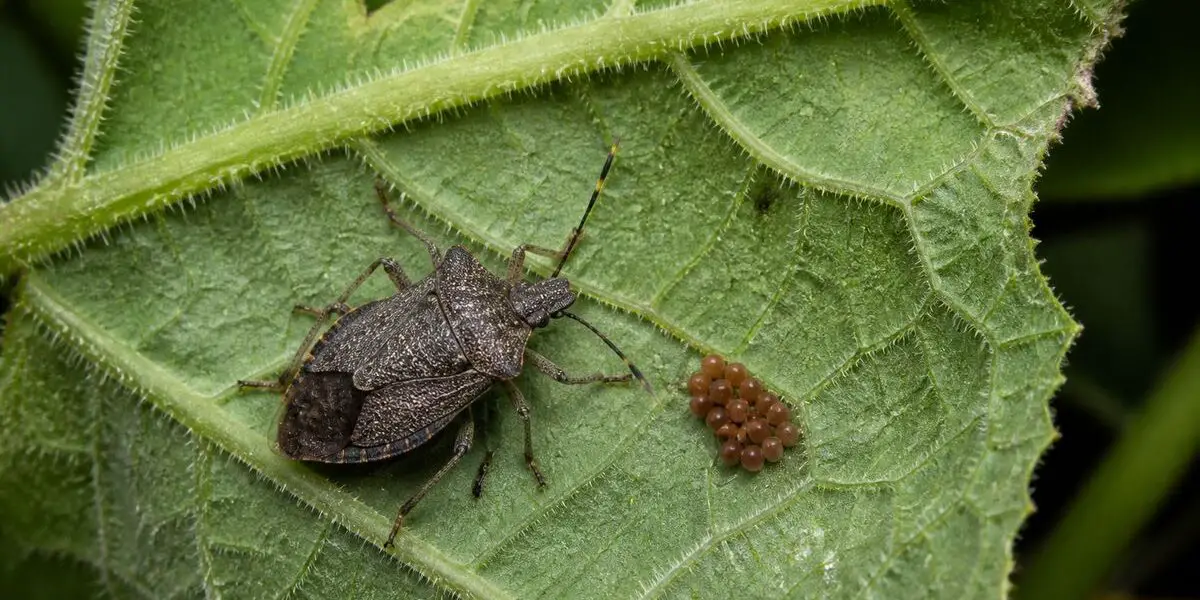
If you are staring at a cluster of insects on your squash and wondering what does a squash bug look like, you are not alone. A wrong ID can lead to the wrong treatment, and squash bugs spread fast on vines. Use the photo cues below, then match the insect to its stage, so you act before feeding damage gets out of control.
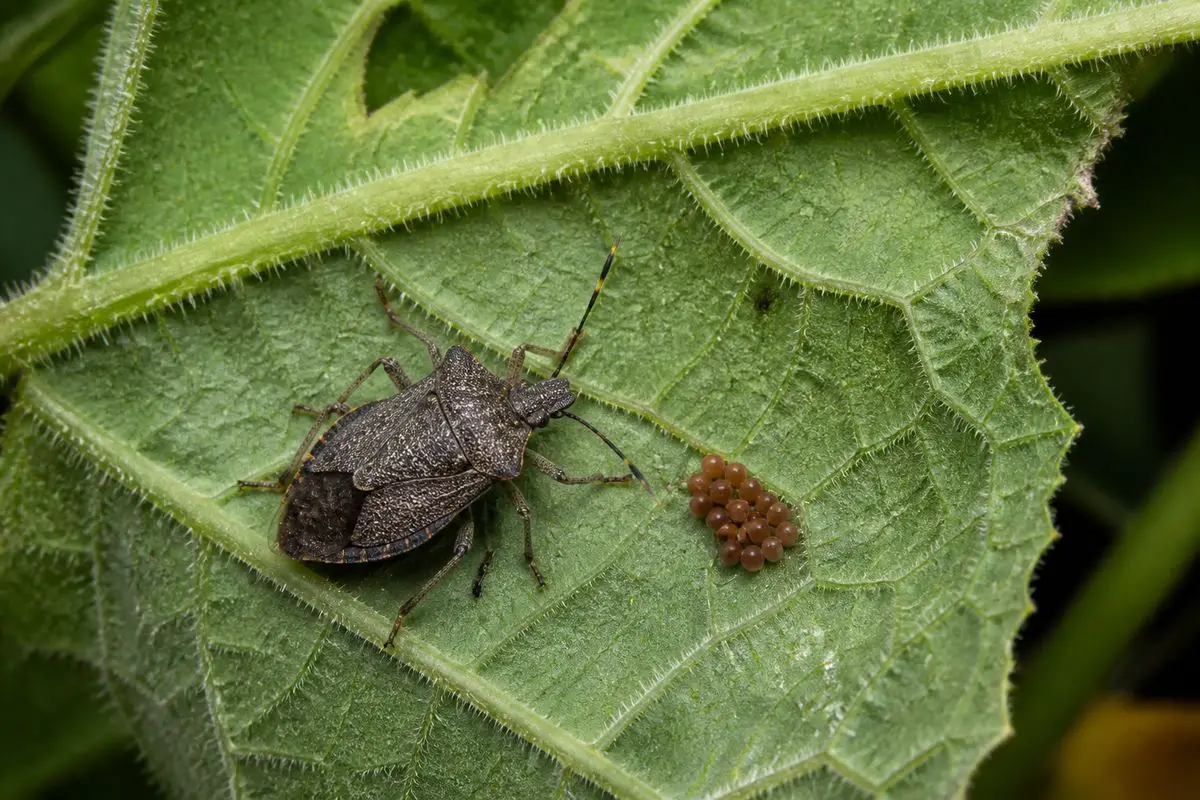
For more help, see our How to Identify Squash Bugs guide.
Quick visual identification
Recognize the adult squash bug
Adult squash bugs are flat and shield-shaped, with a segmented body that looks like it is pressed close to the surface. Their color is usually gray-brown to dark brown, and their outline is more elongated than round. Look closely at the head and thorax area, adults look “structured,” not fuzzy or bulbous. Size is typically around 1/2 inch long, so they are visible without magnification. If you see adults clustered near the crown of the plant, or along stems close to leaf joints, that matches how squash bugs tend to feed and stay protected.
- Scan the plant’s lower area first, crown, leaf joints, and stem bases.
- Look for flat, shield-like bodies in gray-brown tones.
- Compare against nearby insects, squash bugs sit low and look pressed flat.
Spot the nymph stages
Nymphs change color as they grow. Early nymphs are smaller, more rounded, and lighter colored, often light green, gray, or tan. As they mature, they darken toward brown and their bodies look more defined. Nymphs also appear in groups, so you may find several individuals on the underside of leaves or along the vine where adults hide. The key photo cue is the “stage look,” small and pale for young nymphs, darker and more shaped as they approach adult form.
- Find the underside of leaves and the stem near the crown.
- Look for groups of tiny insects rather than single scattered ones.
- Match size and color to age, lighter and smaller means younger.
Tell squash bugs apart from lookalikes
Squash bugs are commonly confused with stink bugs, but squash bugs have a flatter, more elongated shield shape. Stink bugs also tend to have a stronger “pinched” or angled look, and their patterns are often more obvious. Another common mix-up is other leaf-footed and plant bugs that visit squash. Focus on the habitat pattern first: squash bugs concentrate on squash-family plants and stay near leaf joints and vine bases in feeding groups. Then compare body posture, squash bugs look pressed flat, not raised on long legs.
- Compare body shape, squash bugs look flatter and more elongated.
- Compare where they gather, squash bugs cluster on squash plants.
- Use stage clues, nymphs help separate them from adult-only lookalikes.
Eggs, nymphs, and adults by stage
What squash bug eggs look like
Squash bug eggs are tiny and oval, laid in tight clusters. The most useful photo ID cue is the placement, eggs go on the undersides of squash leaves or along stems near leaf joints. Color often shows up as bronze, yellow, or copper tones, which can stand out against green leaf tissue. Eggs look neat and grouped, not spread out randomly like some other insect eggs. If you are seeing a smooth patch of “glued together” ovals under a leaf, that is a strong squash bug signal.
- Turn the leaf over and scan the underside edges and veins.
- Look for clusters of small oval eggs in bronze, yellow, or copper colors.
- Check along stems near the crown, eggs are frequently laid there.
How long eggs take to hatch
Eggs hatch faster in warm weather and slow down in cooler temperatures. In typical warm growing conditions, squash bug eggs hatch in about one to two weeks. This timing matters because you can interrupt the life cycle during the vulnerable nymph stage, when control is more effective. If you find egg clusters, do not wait for “next week,” scrape or remove them as soon as you locate them. That keeps the next generation from establishing on your vines.
- Treat fresh egg clusters immediately after you find them.
- Plan a second inspection 5 to 7 days later to catch any new hatchlings.
- Keep pressure high by checking after warm spells, eggs accelerate with heat.
How the bugs change as they mature
Squash bugs develop from egg to nymph to adult in a clear visual progression. Start with eggs as clustered ovals, then move to nymphs that are smaller and lighter colored. As nymphs mature, their bodies darken from tan or gray toward brown, and their shape looks more shield-like. Adults end up flat and shield-shaped in gray-brown to dark brown tones and are larger enough to spot quickly. This stage shift is your best ID tool when you are unsure, because it matches what you see on the plant at that moment.
- Identify eggs first when possible, because clusters are distinctive.
- Use nymph color, light gray or tan means early stage, darker means closer to adult.
- Confirm adults by flat, shield-shaped bodies near the crown and stems.
Photo cues that confirm an ID
Color, shape, and size
Adult squash bugs are flat and shield-shaped, usually gray-brown to dark brown. Nymphs start lighter, then darken as they grow, so color is stage dependent, not a single fixed trait. Size is also a major clue, adults are about 1/2 inch long, while nymphs are much smaller and look like small, rounded insects early on. Photo IDs get clearer when you match at least two traits together, for example, flat shield shape plus gray-brown color, or egg cluster plus bronze oval eggs under leaves.
- Measure by sight, adults are around 1/2 inch long.
- Match flat shield shape with gray-brown tones for adults.
- Match egg clusters or staged nymph coloring to the exact plant area.
Legs, wings, and body edges
Adults have a shield-like body edge that looks even and close to the surface. Their legs are visible, but the insect does not look “long-legged” the way some other bugs do. Wings are part of the adult form, but from normal garden viewing, what stands out is the overall flat silhouette rather than wing detail. Nymphs lack fully developed wings, so you will see simpler, softer-looking edges and a smaller body profile. The practical ID cue is this, adults look like a flat panel, nymphs look like smaller, darker or lighter pieces without visible wings.
- Look for a flat, panel-like silhouette for adults.
- For nymphs, focus on the smaller body without developed wing shapes.
- Use body edges, squash bug outlines look pressed and structured.
Where squash bugs hide on plants
Squash bugs do not spread evenly across a plant. They concentrate in protected zones, especially the crown of the plant, where vines meet stems, and the leaf joints where leaves attach. Adults and eggs are commonly hidden on the underside of leaves as well as along stems near the crown. When infestations build, you will still find the highest density low on the plant. If you only check leaf tops, you will miss eggs and young nymphs.
- Check the crown and vine base first, then work outward.
- Inspect leaf undersides along veins and leaf joints.
- Look for clusters on stems near where leaves connect.
Common mistakes when identifying squash bugs
Confusing them with stink bugs
Stink bugs and squash bugs can look similar at a glance, especially in color. The easiest fix is to compare body posture and shape, stink bugs often appear a bit more angled, while squash bugs look flatter and more elongated. Another clue is location and clustering pattern on squash. Squash bugs concentrate on squash-family plants and tend to gather around stems, leaf joints, and the crown. If you see a bug on your squash plants but cannot find shield-flat bodies or egg clusters in those exact zones, recheck for lookalikes before you treat.
- Compare silhouette, squash bugs look flatter and more shield-elongated.
- Recheck for egg clusters under leaves and on stems near the crown.
- Look for dense groupings close to the base, squash bugs cluster there.
Mistaking squash bug nymphs for other pests
Young squash bug nymphs can be light tan, gray, or green, which causes confusion with other early-season insects. The reliable method is to use placement and grouping, nymphs show up in clusters on squash leaves undersides and along stems near the crown. Also compare size, nymphs are small and stage-based color shifts happen on the same plant. If the insects you see are isolated on leaf tops, or they do not line up with egg clusters underneath, you are likely looking at something else.
- Check undersides and stems, not just leaf tops.
- Look for groups of nymphs near the crown and leaf joints.
- Pair nymph sightings with nearby egg clusters to strengthen the ID.
When damage looks like bug activity
Feeding damage from squash bugs causes plant stress and can lead to wilting or leaf decline, but damage alone is not an ID. Many pests can cause similar symptoms, so use damage as a flag to inspect, not as proof. Start with the most definitive evidence, egg clusters and nymph groups. Then confirm adults nearby. This approach prevents you from treating the wrong insect because leaf yellowing, scarring, or weak vines can come from more than one cause.
- Use damage to decide where to search, then search for eggs and nymphs.
- Match symptoms with life stages on the underside of leaves.
- Confirm adults in the same low plant zones where you found eggs.
What to do after you identify them
Check leaves, stems, and undersides daily
Once you find squash bug adults, nymphs, or egg clusters, daily checks stop the problem from escalating. Squash bugs lay eggs in clusters, and young nymphs move onto feeding spots quickly. Focus on the zones where you already found them, leaf undersides near veins, leaf joints, and stems close to the crown. Consistent inspection also helps you catch new egg clusters before they hatch.
- Inspect leaf undersides first, especially near veins and joints.
- Check stems and vine bases close to the crown.
- Track what you find, adults, nymphs, and fresh eggs, on the same plants each day.
Remove eggs and young nymphs early
You get the best results by removing eggs and early nymphs before they darken and bulk up. Scrape egg clusters off with a dull knife or scrape tool, then drop them into soapy water. For young nymph groups, use a steady physical knockdown, or remove small clusters directly. If you use sprays, start with insecticidal soap or neem-oil solutions aimed at the soft nymphs, coverage has to reach the undersides where they feed.
- Scrape egg clusters into a jar or container with soapy water.
- Knock nymph clusters into soapy water at dawn, when they are slow and clustered.
- Use insecticidal soap or neem-oil on nymphs on leaf undersides, not adults.
Know when infestation pressure is high
Infestation pressure is high when you see multiple life stages at once, eggs plus nymphs, plus adults clustered near the crown. Pressure rises quickly, especially when eggs hatch into new nymphs and you keep finding fresh clusters after your first removal. Another sign is density, if you are finding repeated clusters on several leaves per plant, that is active spread. When pressure is high, prioritize targeted removal and consistent day-by-day inspection, then adjust your control based on what stage you keep finding.
- Treat it as high pressure when eggs and nymphs appear together.
- Increase effort when you find repeated new clusters after removal.
- Focus time on undersides and crown zones where density stays highest.
Frequently Asked Questions
What does a squash bug look like up close?
Adult squash bugs are flat, shield-shaped, and usually gray-brown. Nymphs are smaller, more rounded, and often light green, gray, or tan before darkening as they grow.
How long does it take squash bug eggs to hatch?
In warm weather, squash bug eggs often hatch in about one to two weeks, though cooler temperatures can slow development.
What do squash bug eggs look like?
The eggs are tiny, oval, and usually laid in neat clusters on the undersides of squash leaves or along stems. They often look bronze, yellow, or copper-colored.
What bugs are commonly confused with squash bugs?
Squash bugs are often confused with stink bugs, but squash bugs tend to be flatter, more elongated, and are commonly found on squash-family plants in clusters.
Where should I look for squash bugs on the plant?
Check the undersides of leaves, leaf joints, vine bases, and stems near the crown of the plant, where adults and eggs are often hidden.
Related Posts:
Squash Bugs
- Squash Bug Life Cycle: When to Strike for Best Results
- Does Neem Oil Kill Squash Bugs? How to Apply It Right
- How to Get Rid of Squash Bugs Naturally
- How to Treat a Bad Squash Bug Infestation Fast
- Homemade Squash Bug Sprays That Actually Work
- How to Stop Squash Bugs From Surviving the Winter
- Kill Squash Bugs With Dish Soap: The Dawn Spray Method
- Companion Plants That Repel Squash Bugs Naturally
- Spot Squash Bug Damage Early and Save Your Plants
- How Squash Bugs Damage Plants Through Their Life Cycle
- How to Identify Squash Bugs in Your Garden
- A Season-Long Checklist to Keep Squash Bugs Away
- Trap Boards and Trap Crops That Catch Squash Bugs
- What Eats Squash Bugs? Natural Predators That Help
- How to Spot Baby Squash Bugs Early on Your Plants
- Squash Bug vs. Stink Bug: How to Tell Them Apart
- How to Prevent Squash Bugs in Your Garden
- Squash and Zucchini Varieties That Resist Squash Bugs
- How to Find Squash Bug Eggs Before They Hatch
- How to Control Squash Bugs Without Chemical Pesticides